
Key Takeaways
Storage unit insurance protects your belongings from fire, theft, and water damage when your homeowner’s or renter’s policy falls short. In Anchorage, where extreme cold and seasonal moves create real risk, understanding your coverage options before you sign a lease can save hundreds of dollars in unexpected losses. Most storage facilities require proof of insurance, and policies can vary in cost depending on coverage level and insurer.
- Many standard homeowner’s policies limit off-premises storage coverage to a fraction of your personal property limit, which may not be enough.
- Storage-specific insurance costs vary depending on declared value and deductible.
- Anchorage renters storing vehicles, boats, or trailers need separate scheduled property coverage.
- Facilities may offer tenant protection plans on-site, but comparing them to your existing policy is worth the time.
- Heated storage units in Anchorage reduce moisture and freeze-thaw damage risk, which can affect what your insurer will and will not cover.
- Read every exclusion before signing: flood, mold, and rodent damage are commonly excluded.
Why Storage Unit Insurance Matters More in Anchorage
Storage unit insurance covers personal property kept in a rented storage unit against losses from covered perils such as fire, theft, vandalism, and certain water events. In Anchorage specifically, extreme seasonal temperature swings, heavy snow loads, and condensation inside unheated units create risks that mild-climate renters rarely face. Knowing exactly what your policy covers before you load a single box into a unit is the responsible move.
Anchorage residents deal with unique storage challenges. Military families rotating through JBER often store household goods for six months or longer. Students leaving for the summer leave electronics and furniture behind. Small-business owners store inventory through the long winter. Each situation carries different risk profiles, and a generic one-size policy may leave real gaps. Insurance requirements are among the most common questions renters have before signing a lease, which shows how widespread the confusion is. Before looking at any specific unit or pricing, it pays to understand how insurance works in this context.

How Your Existing Homeowner’s or Renter’s Policy Works With Storage
Most homeowner’s and renter’s insurance policies do extend some coverage to belongings stored off-premises, but the coverage amount is typically limited to a percentage of the total personal property coverage limit — often a relatively small fraction. That means a household with significant personal property coverage at home may find only a fraction of that applies to items in a storage unit. For many Anchorage households storing full rooms of furniture, appliances, or outdoor gear, that ceiling is easy to exceed.
What perils does a standard policy typically cover in storage?
A standard homeowner’s or renter’s policy generally covers fire, lightning, windstorm, theft, and vandalism for off-premises property. However, flood damage is almost universally excluded from standard policies and requires a separate flood insurance endorsement through the National Flood Insurance Program. In Anchorage, spring thaw and drainage issues can cause ground-level flooding that damages stored goods, so this exclusion deserves serious attention.
Does renter’s insurance work the same way as homeowner’s for storage?
Renter’s insurance follows the same off-premises rule, typically capping storage coverage at a percentage of the personal property limit. The key difference is that renter’s policies often carry lower total limits to begin with, meaning the dollar amount available for storage unit contents may be quite limited. Someone storing a couch, a TV, winter sports gear, and boxes of clothing can easily exceed that amount. Reviewing the declarations page of any existing policy is the right first step before renting a unit.
When should someone buy a separate storage-specific policy?
A separate policy makes sense when the stored value exceeds the off-premises limit in an existing policy, when items in storage include high-value goods like electronics or musical instruments, or when the existing policy excludes certain perils that matter in Alaska. Storage-specific policies allow the renter to declare a specific coverage amount rather than inheriting a percentage-based cap.
Types of Storage Unit Insurance Available to Anchorage Renters
Anchorage renters have three primary routes for insuring stored property: an endorsement added to an existing homeowner’s or renter’s policy, a standalone storage insurance policy purchased from a specialty insurer, or a tenant protection plan offered directly through the storage facility. Each has different cost structures, coverage limits, and exclusions. Comparing all three before committing to one is worth the time investment.
What is a policy endorsement and how much does it cost?
An endorsement, sometimes called a rider, adds or modifies coverage on an existing policy. A storage endorsement can raise the off-premises limit from 10% to a higher declared amount. Endorsement costs vary by insurer and the additional limit requested. The advantage is simplicity: everything stays with one insurer and one deductible. The disadvantage is that the same deductible applies, which may be substantial, making small claims impractical to file.
How do standalone storage insurance policies work?
Standalone policies issued by specialty insurers are designed specifically for self-storage tenants. Coverage amounts and premiums vary by carrier and declared value. Deductibles on standalone policies are often lower than those on homeowner’s policies. These policies may also include coverage for items excluded from standard homeowner’s policies, though exclusions vary widely by carrier. Reviewing property insurance on Wikipedia can provide helpful background. Reading the specific exclusion list is essential before purchasing.
What are tenant protection plans offered at the facility?
Many storage facilities offer tenant protection plans administered through a third-party program. These plans are not insurance in the traditional sense; they are often contractual liability programs. They are convenient to add at sign-up, though costs and coverage limits vary by program and should be confirmed directly with the facility. However, they may exclude more perils than a standalone insurance policy, and the facility’s contractual liability is different from a direct insurance claim. Renters should ask for the full terms sheet before enrolling. Asking any storage facility for the full terms of their protection offerings before enrolling can make this comparison easier.
What Storage Unit Insurance Typically Does NOT Cover
Exclusions matter as much as what a policy covers. Several common storage-related losses fall outside standard coverage, and Anchorage conditions make some of these exclusions especially relevant. Knowing the gaps helps renters make informed decisions about which items to store, how to store them, and whether additional coverage is worth the cost.
Is flood damage covered in storage unit policies?
Flood damage caused by natural flooding, such as snowmelt runoff or overflow from drainage systems, is excluded from virtually all standard policies and most standalone storage policies. The National Flood Insurance Program does not cover contents in a storage unit under most circumstances. Renters storing items at ground level in Anchorage, where spring thaw creates real water intrusion risk, should ask specifically about this exclusion and consider elevating items on pallets as a practical precaution.
Are mold and mildew losses covered?
Mold and mildew damage is excluded from most storage policies because it is considered a gradual damage event rather than a sudden accidental loss. In Anchorage, where temperature swings cause condensation inside unheated units, mold risk is real. Choosing a heated storage unit in Anchorage significantly reduces condensation and the conditions that lead to mold growth. This is one practical reason why heated storage carries a measurable benefit beyond comfort: it actively lowers the risk of a loss category that insurance will not pay for.
Are vehicles, boats, and trailers covered under storage unit policies?
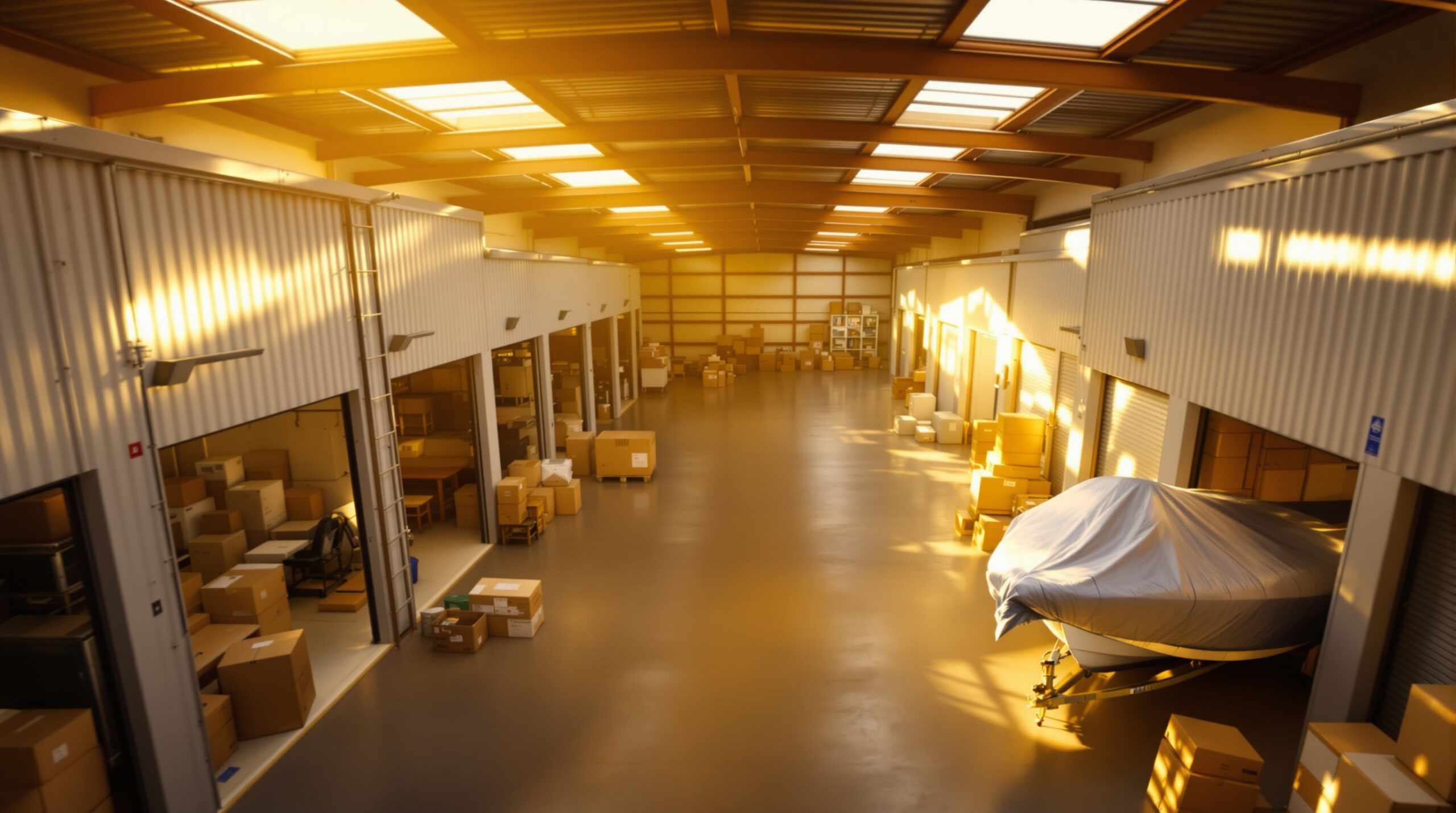
Standard storage policies do not cover motorized vehicles. Cars, trucks, motorcycles, boats, ATVs, and snowmobiles stored in a unit require separate scheduled property coverage through an auto or marine insurance policy. In Anchorage, where snowmobiles, ATVs, and boats are commonly stored seasonally, confirming adequate separate coverage for these vehicles before storing them is an important step.